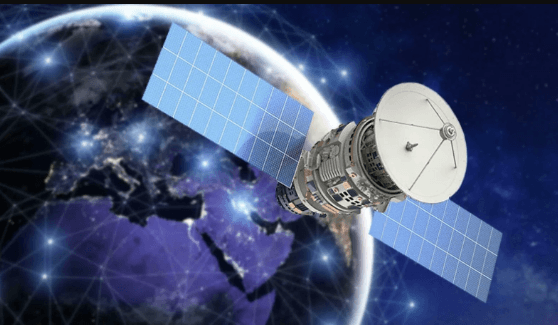
Satellite internet provides broadband by linking ground stations and orbiting satellites to reach remote areas. Signals travel through space and atmosphere, with latency affected by distance and weather. Orbital classes—GEO, MEO, and LEO—shape coverage, handoffs, and licensing implications. Tradeoffs include latency, weather sensitivity, data caps, and setup requirements. The framework clarifies how design choices impact performance and reliability, while practical planning reveals the constraints users must manage to stay connected. The next question awaits a focused comparison of these systems.
What Is Satellite Internet and Why It Exists
Satellite internet is a communications service that delivers broadband access to remote and underserved areas by transmitting data between ground stations and orbiting satellites.
The system exists to expand connectivity where traditional networks fail, enabling independent information exchange and opportunity.
It analyzes satellite economics and regulatory hurdles, balancing capital costs, spectrum use, licensing, and incentives with durable, scalable infrastructure and user empowerment.
How Signals Travel: From Space to Your Home
Signals travel in two directions between space and ground infrastructure, forming a continuous data loop that delivers internet access to households.
Data flows via satellites and ground stations, subject to signal propagation characteristics, atmospheric conditions, and latency.
Ground antenna alignment is critical for reliable link quality, requiring precise pointing, tilt, and calibration.
Proper operation minimizes errors, preserves bandwidth, and ensures consistent service from satellite to residence.
Altitude Matters: GEO, MEO, and LEO Systems Explained
Altitude determines how satellites are positioned and how networks behave. GEO, MEO, and LEO describe distinct orbital regimes, each with tradeoffs in coverage, repeat visibility, and network density. Orbital mechanics govern ascent, drift, and handoffs between satellites. Licensing regimes shape deployment and operation, influencing spectrum access and compliance. Clear choice aligns mission goals with technical and regulatory realities, ensuring scalable, resilient connectivity.
Real-World Tradeoffs: Latency, Weather, Data Caps, and Setup Considerations
Latency, weather, data caps, and setup considerations shape the practical performance and usability of satellite Internet systems.
Real-world tradeoffs revolve around latency vs. bandwidth, where higher latency degrades interactive tasks even as throughput supports downloads.
Weather impact tradeoffs further constrain reliability, with rain fade and atmospheric conditions affecting signal quality.
Careful planning enables flexible, user-enabled configurations, balancing cost, caps, and installation choices.
Frequently Asked Questions
How Does Satellite Internet Affect Online Gaming Performance?
Satellite internet can hinder online gaming performance, primarily due to latency variability and occasional packet loss. These factors produce inconsistent response times, affecting real-time play, precision, and matchmaking experiences, while higher throughput mitigates some but not all gameplay challenges.
Can Satellite Internet Work Without a Clear View of the Sky?
A moonlit loom suspends possibilities; without a clear sky, performance falters. The allegory shows a weary traveler seeking light. Dish alignment matters; signal obstruction blocks progress, reducing bandwidth and reliability, limiting online freedom and consistent connectivity.
Are There Health or Privacy Concerns With Satellite Dishes?
The answer: Yes, there are privacy concerns and health concerns associated with satellite dishes. The device emits signals and collects user data; potential exposure to RF fields exists. Proper safeguards, transparent policies, and regulatory compliance mitigate risks while preserving freedom.
See also: SaaS vs PaaS vs IaaS Explained
What Urban vs. Rural Coverage Differences Exist Globally?
Urban coverage generally exceeds rural coverage globally, though gaps persist in remote regions due to terrain, infrastructure, and cost. Rural coverage often lags, but improvements target underserved areas, while urban coverage benefits from dense networks and fiber backbones.
How Reliable Is Satellite Internet During Eclipse Events or Storms?
“Where there’s a will, there’s a way.” Satellite Internet reliability during eclipses shows brief signal dips; storms impact channels, causing temporary degradation. Overall, resilience depends on beam agility, ground station redundancy, and adaptive modulation to maintain continuity.
Conclusion
Satellite internet bridges remote regions to the broader web by linking ground stations with orbiting satellites. A concise statistic that hooks readers: latency improves dramatically with lower orbits—LEO networks can cut typical round-trip delays from ~600 ms (GEO) to 20–40 ms, enabling near-real-time applications. In summary, the system’s reach hinges on altitude, signal paths, and ground hardware, with tradeoffs among latency, bandwidth, weather sensitivity, and data limits. Proper planning ensures durable, scalable access to information.